NexoraGPU NexoraGPU

China Top Edge AI Server Manufacturer for Global Buyers

Time:2026-09-14 Author:Liam
0%

China has become a significant sourcing destination for organizations seeking reliable edge AI infrastructure. A capable edge ai server manufacturer must deliver more than attractive pricing. It must combine engineering depth, manufacturing discipline, cybersecurity awareness, and responsive technical support.

These servers process data near cameras, robots, medical devices, and industrial machines. A factory floor may require millisecond-level responses, dust-resistant enclosures, and stable operation beside powerful motors. A retail site may need compact systems, remote monitoring, and low energy consumption. Buyers should examine GPU compatibility, CPU performance, memory capacity, expansion options, cooling design, operating temperature, and long-term component availability.

Jensen Huang, founder and CEO of NVIDIA, said, “The next wave of AI is physical AI.” This observation reflects a clear market shift. Intelligence is moving from distant data centers into vehicles, warehouses, hospitals, and production lines. Consequently, a qualified Chinese edge AI server manufacturer should prove its capabilities through documented testing, repeatable quality control, and real deployment experience.

Look for ISO-certified processes, traceable components, burn-in testing, firmware management, and transparent warranty terms. Ask for performance data under realistic workloads, not only laboratory peaks. No supplier is perfect. Even strong manufacturers may face supply delays, thermal limits, or software integration problems. Honest communication matters more than polished promises.

This guide examines China’s leading edge AI server manufacturers for global buyers. It considers technical expertise, customization capacity, compliance readiness, after-sales service, and practical deployment value. The goal is not to praise every supplier, but to help buyers identify dependable partners for demanding edge AI projects.
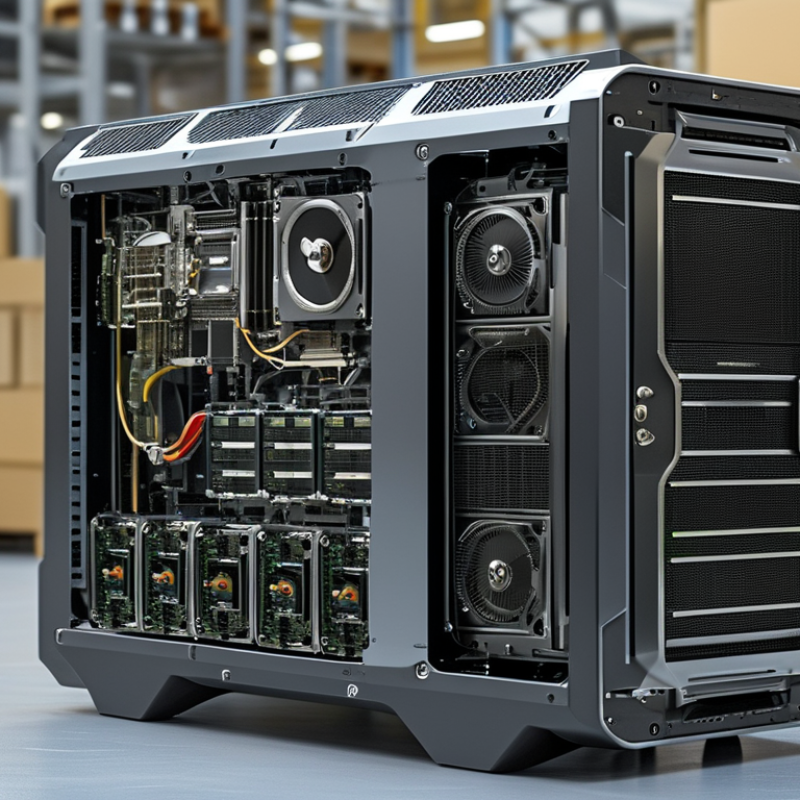
China Top Edge AI Server Manufacturer for Global Buyers

Definition and Role of Edge AI Servers in Modern Computing

An edge AI server is a compact computing system placed near the devices creating data. Unlike a distant cloud server, it processes information locally. Cameras, sensors, and machines can send data directly to it. This arrangement reduces delay, bandwidth use, and dependence on continuous internet access.

They are not magic.

In a warehouse, an edge server can analyze camera feeds beside the production line. It may identify missing components within seconds. In transportation, it can process roadside sensor data without sending every frame away. Global buyers often choose these systems for factories, retail sites, and remote facilities. Practical evaluation matters. A small cabinet may contain multiple accelerators, redundant storage, and industrial cooling. Dust, vibration, heat, and unstable power can still reduce performance.

Edge AI servers also support centralized management, encrypted data transfer, and controlled software updates. These functions help operators protect sensitive operational information. However, security settings are often overlooked during installation. That is a real weakness. Buyers should check processing capacity, thermal design, operating temperature, expansion options, and long-term component availability. They should also request testing records under realistic workloads, not only laboratory results. A capable China-based manufacturer should provide clear specifications, traceable quality procedures, and responsive technical support for international deployment. Even then, performance figures can change after model updates. Regular monitoring and honest maintenance planning remain essential.

Key Technologies Used by China’s Leading Edge AI Server Manufacturers

China’s leading edge AI server manufacturers focus on compact systems that process data near cameras, sensors, and industrial equipment. This design reduces cloud dependency and supports faster decisions in factories, hospitals, ports, and transport networks. Experienced engineers often combine CPUs, GPUs, and NPUs in one platform. Each processor handles a different workload. NPUs accelerate vision models, while GPUs support heavier training and inference tasks.

Thermal engineering is equally important. Short air channels, high-efficiency fans, and monitored heat sensors help maintain stable performance in small enclosures. Some systems use rugged chassis, dust protection, and wider operating temperature ranges for demanding sites. High-speed Ethernet, time-sensitive networking, and flexible expansion slots also matter. They allow buyers to connect cameras, storage devices, and control systems without redesigning the entire installation.

Security technologies deserve careful attention. Secure boot, hardware-based encryption, identity verification, and isolated virtual machines can reduce operational risks. Manufacturers also provide remote diagnostics, firmware management, and component health reports. These functions save maintenance visits, especially across large international deployments. In practice, no design is perfect. More computing power can increase heat, cost, and energy use. A smaller server may be efficient, but it can limit future upgrades. Buyers should test real workloads, local regulations, network conditions, and long-term service support before approving a production order. Performance figures alone are not enough.

Manufacturing Standards and Quality Control for Global Buyers

China Top Edge AI Server Manufacturer for Global Buyers

Reliable edge AI servers begin with disciplined manufacturing standards, not attractive specifications. A capable factory should follow a documented quality system, such as ISO 9001, and apply relevant safety, EMC, and environmental requirements for each destination market. Production teams should verify processor installation, memory seating, cable routing, and thermal-paste coverage. Small details matter.

Quality control should continue beyond final assembly. Engineers can run power-on checks, network tests, storage diagnostics, and extended burn-in cycles. Thermal chambers help reveal unstable cooling under sustained AI workloads. Each unit should carry a traceable serial record, including component batches, test results, firmware versions, and inspector approval. This evidence gives global buyers clearer control over incoming inspection and warranty analysis. However, no factory is perfect. A recurring fan alarm or loose connector should trigger a process review, not only a repair. Some teams still rely too heavily on final inspection, which can hide earlier process weaknesses.

Tips: Request a sample quality report before ordering. Check the acceptance criteria, test duration, and calibration dates. Confirm whether packaging tests cover vibration, humidity, and long-distance transport. Ask for change-control procedures when components become unavailable. Keep communication precise. A shared checklist prevents expensive assumptions. Regular video audits can also reveal practical details, such as floor cleanliness, label accuracy, and how rejected parts are isolated.

Product Selection Criteria for Different Edge AI Applications

China Top Edge AI Server Manufacturer for Global Buyers

Product Selection Criteria for Different Edge AI Applications

Choosing an edge AI server starts with the application, not the processor name. A retail vision system may need compact hardware, low noise, and reliable video decoding. An industrial inspection line needs stronger inference performance, fast storage, and stable operation near heat, dust, and vibration. Transportation systems often require wide temperature support, redundant networking, and rapid response under changing conditions.

Measure real workloads before comparing specifications. Test the intended models, camera streams, batch sizes, and latency targets together. A server that handles one camera smoothly may struggle with eight streams. Power limits also matter. A high-performance accelerator can increase cooling demands and installation costs. This trade-off is easy to underestimate.

Healthcare and public-service deployments require careful data protection, access control, and dependable system logs. For outdoor use, check enclosure protection, thermal design, remote management, and maintenance access. Select storage with sufficient endurance for continuous recording and frequent model updates. Confirm support for the required operating systems, frameworks, interfaces, and security standards.

Field testing should include network interruptions and sudden temperature changes. Real sites are rarely clean. I have seen promising designs fail because cable access was overlooked. That detail matters. Buyers should also review product lifecycle policies, spare-part availability, and technical support response times. These criteria may seem less impressive than benchmark scores, but they often decide whether an edge AI deployment remains useful after installation.

Global Procurement, Compliance, Support, and Delivery Considerations

China Top Edge AI Server Manufacturer for Global Buyers

For global buyers, selecting a China-based edge AI server manufacturer requires more than checking processor speed. A dependable supplier should explain rack depth, power draw, thermal limits, and expected inference workloads. Ask for production records, test procedures, and traceable component documentation. Real experience matters here. A factory visit, live video inspection, or sample unit can reveal cable routing, fan noise, and service access. Specifications alone can mislead.

Procurement teams should confirm export documents, product classifications, packaging standards, and destination-country requirements before payment. The supplier must support accurate commercial invoices, serial-number lists, safety files, and customs data. Compliance is not a final checkbox. It affects design choices, labeling, power supplies, radio modules, and data-handling configurations. Buyers should clarify warranty scope, spare-part availability, remote diagnostics, and response times across time zones. Written service levels reduce uncertainty, although they cannot solve every field problem. That limitation deserves honest discussion.

Delivery planning should include burn-in testing, shock-resistant crates, humidity protection, and clear acceptance criteria. For large deployments, request a pilot batch before committing to full volume. Measure boot time, accelerator utilization, network stability, and temperature under sustained workloads. Small discrepancies can become expensive. A capable manufacturer should provide engineering support during integration, not only after shipment. Still, buyers should keep independent validation and contingency plans. No supplier is perfect, and undocumented assumptions often cause the longest delays.

China Top Edge AI Server Manufacturer for Global Buyers - Global Procurement, Compliance, Support, and Delivery Considerations

Procurement Dimension Key Buyer Requirement Typical Technical or Commercial Data Compliance or Verification Consideration Recommended Documentation Delivery Impact
Edge AI Workload Inference, video analytics, industrial inspection, robotics, retail analytics, or local generative-AI workloads Define model type, framework, batch size, concurrent streams, latency target, and whether training is required. Edge inference usually prioritizes low latency, local processing, and reduced dependence on cloud connectivity. Require a workload-specific proof of concept rather than relying only on theoretical accelerator performance. Benchmark methodology, model files, test configuration, latency results, throughput results, and power measurements Performance validation should be completed before final production quantities are confirmed.
Processor and Accelerator Balanced CPU, GPU, NPU, or other accelerator configuration Common enterprise configurations may include multi-core server CPUs, one or more inference accelerators, ECC memory, and hardware virtualization support. Accelerator selection should match INT8, FP16, BF16, or FP32 precision requirements. Confirm software compatibility, driver support, thermal design, long-term availability, and regional import restrictions where applicable. Bill of materials, processor specification, accelerator specification, driver matrix, and lifecycle statement Specialized accelerators may have longer lead times than standard server components.
Memory and Storage Reliable memory capacity and fast local data access Typical edge systems may use 32 GB to 512 GB of ECC RAM, enterprise SSDs, NVMe storage, RAID, and optional removable or encrypted storage. Actual capacity depends on model size, data retention, and camera or sensor volume. Verify ECC operation, SSD endurance rating, RAID behavior, secure erase capability, and replacement procedures. Memory population guide, storage compatibility list, RAID configuration guide, and endurance specifications Higher-capacity enterprise SSDs and non-standard storage layouts can affect component availability.
Mechanical Design Rack, wall, desktop, vehicle, or industrial deployment format Common server form factors include short-depth 1U or 2U rack systems, compact edge gateways, and ruggedized chassis. Confirm dimensions, mounting method, cable clearance, ingress protection, shock, vibration, and operating altitude requirements. Environmental claims must be supported by test conditions and applicable laboratory reports. Mechanical drawing, mounting instructions, environmental test report, and installation clearance diagram Ruggedized or customized chassis generally require additional engineering and production time.
Power and Thermal Management Stable operation within the buyer’s electrical and cooling envelope Specify input voltage, frequency, maximum power, typical power, thermal design power, airflow direction, fan redundancy, and acoustic limits. A power budget should include accelerators, storage, networking, and expansion cards. Electrical safety and electromagnetic compatibility requirements vary by destination market and product configuration. Power budget, thermal report, fan curve, PSU specification, and installation requirements High-power configurations may need dedicated circuits, higher-capacity PSUs, or enhanced site cooling.
Network Connectivity Reliable connectivity for sensors, private networks, and management systems Possible interfaces include 1GbE, 2.5GbE, 10GbE, 25GbE, fiber connectivity, Wi-Fi, private cellular, and serial or industrial interfaces. Network selection should reflect camera count, data rate, redundancy, and uplink distance. Wireless and cellular functions may require country-specific radio approvals and operator compatibility testing. Port map, network compatibility matrix, firmware release notes, and radio certification documents where applicable Wireless modules, fiber transceivers, and region-specific networking options can affect export configuration.
Software and AI Stack Stable deployment, monitoring, update, and rollback capability Confirm operating-system support, container runtime, orchestration method, inference framework, SDK, remote management, secure boot, role-based access, logging, and over-the-air update capability. Review open-source licenses, software bill of materials, vulnerability disclosure process, and update support period. Software image, API documentation, SBOM, security update policy, compatibility matrix, and release history Custom software images should be frozen and acceptance-tested before shipment.
Cybersecurity Protection of models, data, credentials, and remote-management interfaces Recommended controls include secure boot, TPM-based key protection, disk encryption, signed firmware, unique credentials, least-privilege access, network segmentation, audit logs, and a documented patch process. Use recognized security practices such as ISO/IEC 27001-aligned processes, NIST Cybersecurity Framework principles, and applicable customer security requirements. Security hardening guide, vulnerability response policy, penetration-test summary, SBOM, and credential-management procedure Security review may add engineering time but reduces deployment and acceptance risk.
Market Compliance Legal sale and operation in the destination country or region Requirements may include electrical safety, EMC, radio, environmental, product safety, and energy-related obligations. The exact set depends on destination, voltage, wireless features, and final product classification. CE marking may apply in the European Economic Area; FCC requirements may apply to relevant products in the United States; UKCA, RCM, KC, or other national requirements may apply elsewhere. Declaration of conformity, test reports, technical file, labeling artwork, user manual, and importer information Missing or mismatched documents can delay customs clearance, marketplace listing, or site acceptance.
Environmental Compliance Responsible handling of restricted substances, packaging, and end-of-life equipment Common buyer checks include RoHS substance restrictions, REACH-related declarations, WEEE obligations where applicable, recyclable packaging, and battery transport rules if batteries are included. Applicability depends on destination market and product design. Supplier declarations should match the actual bill of materials. RoHS report, REACH declaration, WEEE information, packaging material declaration, and battery documents where applicable Non-compliant packaging or documentation can create customs, recycling, or customer-audit issues.
Export and Customs Accurate classification and smooth international shipment Prepare commercial invoice, packing list, certificate of origin where requested, product description, serial-number list, and accurate customs classification. Server classification may vary according to configuration and destination customs rules. Check export-control requirements for advanced computing components, encryption functions, and the intended end user before accepting the order. Commercial invoice, packing list, certificate of origin, export declaration, end-use statement, and product classification information Customs review, licensing requirements, or incomplete consignee information may extend transit time.
Quality Assurance Repeatable production quality and traceability Recommended controls include incoming inspection, burn-in testing, memory testing, storage testing, thermal testing, network testing, firmware verification, and serial-number traceability. Ask whether the quality system is aligned with ISO 9001 principles and whether production records are retained for the agreed period. Inspection and test plan, factory acceptance test, burn-in record, calibration records, and serial-number report Pre-shipment inspection can reduce field failures and simplify acceptance at the destination.
Customization and MOQ Configuration flexibility without creating excessive supply-chain risk Customization may cover memory, storage, accelerator cards, chassis, labels, BIOS settings, operating system, language, power cords, and network modules. Minimum order quantity and engineering charges should be agreed in writing. Any hardware change can affect compliance reports, thermal performance, firmware compatibility, and customs descriptions. Approved configuration sheet, engineering-change procedure, golden sample record, and change-control log Low-volume customization is usually faster when based on standard platforms and validated components.
Warranty and Service Predictable support for international deployments Define warranty duration, return-material-authorization process, remote diagnosis, replacement-part availability, repair location, response time, and whether on-site service is included. Service-level commitments should identify exclusions, customer responsibilities, software-versus-hardware coverage, and cross-border shipping responsibilities. Warranty terms, RMA workflow, escalation matrix, spare-parts list, and service-level agreement Local spare stock or regional repair capability can materially reduce downtime.
Packaging and Transport Protection against shock, vibration, moisture, and static electricity Use anti-static protection, cushioning, humidity control where needed, impact indicators for sensitive shipments, and packaging sized for the selected chassis and accessories. Wood packaging used in international trade may need treatment and marking under ISPM 15 requirements. Packing specification, pallet dimensions, gross and net weight, handling labels, and transport test records Oversized or heavy systems may require special freight handling and can increase landed cost.
Lead Time and Delivery Reliable schedule from purchase order to deployment Separate sample lead time, production lead time, compliance-document lead time, and transit time. Confirm the inspection milestone, shipment terms under Incoterms, and final delivery responsibility. Incoterms such as EXW, FCA, FOB, CIF, DAP, and DDP allocate different costs, risks, and customs responsibilities; the selected term should match the buyer’s import capability. Production schedule, milestone plan, shipping quotation, tracking details, and delivery acceptance checklist Component allocation, factory testing, holidays, customs clearance, and destination delivery capacity all affect the final schedule.
Total Cost of Ownership Evaluate more than the initial equipment price Include hardware, accelerator cards, memory, storage, software support, power consumption, cooling, freight, duties, installation, spares, warranty service, and secure disposal. Compare quotations using the same configuration, warranty scope, delivery term, currency, tax treatment, and acceptance criteria. Itemized quotation, five-year cost model, power estimate, spare-parts pricing, and renewal terms A transparent cost model reduces unexpected landed costs and supports multi-country procurement decisions.

FAQS

What is an edge AI server?

It processes data near cameras, sensors, or machines instead of sending everything to distant cloud systems. Faster decisions matter.

Which processors are commonly combined in compact edge systems?

CPUs manage general tasks, GPUs handle demanding inference, and NPUs accelerate vision models. Each has a different role.

How do edge servers control heat?

Short air channels, efficient fans, and heat sensors help stabilize performance inside small enclosures. Heat remains a concern.

What physical features support difficult industrial locations?

Rugged chassis, dust protection, wider temperature ranges, and flexible expansion slots improve site reliability. Conditions can be harsh.

What security features should buyers examine?

Look for secure boot, hardware encryption, identity verification, and isolated virtual machines. Remote firmware management also helps.

How can buyers assess manufacturing quality?

Request quality records covering component batches, firmware versions, inspections, and test results. Traceability is important.

Which factory tests are useful before shipment?

Power-on checks, network tests, storage diagnostics, and extended burn-in testing reveal practical weaknesses. Thermal chamber testing adds evidence.

What should global buyers confirm before placing an order?

Confirm power draw, rack depth, thermal limits, export documents, packaging standards, and destination-market requirements. Specifications alone can mislead.

Why is a pilot batch useful?

A pilot batch allows buyers to measure boot time, network stability, temperature, and accelerator usage before full deployment. Small gaps become expensive.

What support should a supplier provide after delivery?

Buyers should confirm spare parts, remote diagnostics, warranty coverage, response times, and engineering help during integration. Written service levels help, but cannot solve every field problem.

Conclusion

Edge AI servers bring artificial intelligence processing closer to where data is generated, enabling faster response times, reduced bandwidth usage, and improved privacy for applications such as industrial automation, smart infrastructure, retail analytics, and transportation. A leading edge ai server manufacturer typically combines high-performance CPUs, GPUs, AI accelerators, efficient thermal designs, ruggedized components, and flexible networking options to support demanding workloads in compact and energy-conscious systems.

For global buyers, reliable manufacturing standards, component traceability, multi-stage testing, and strict quality control are essential. Product selection should consider processing capacity, memory, storage, environmental conditions, expansion requirements, operating system compatibility, and long-term maintenance needs. Buyers should also evaluate export documentation, safety and electromagnetic compliance, data protection responsibilities, technical support, warranty coverage, packaging, lead times, and delivery capability. A clear procurement process and responsive after-sales service help organizations deploy edge AI infrastructure efficiently and maintain stable performance across different regions and use cases.

Liam

Liam

Liam is a dedicated marketing professional with a profound expertise in the industry, where he excels at highlighting the unique advantages of our core products. With a keen understanding of market trends and consumer needs, Liam frequently updates our company’s professional blog, providing......